Iran’s removal of Afghan nationals has become one of the region’s most consequential human-rights and migration issues. By October 3, 2026, approximately 493,300 Afghans had been recorded as deported from Iran, out of 581,600 recorded returns to Afghanistan from the country that year. The figures show the scale of forced movement, but they do not establish that every removal was unlawful or explain what happened to each person afterward.
The UNHCR Afghanistan returns dashboard brings together information from the UN Refugee Agency, the International Organization for Migration and government reporting. Its figures distinguish deportations from other forms of return, including assisted voluntary repatriation. That distinction matters because the circumstances in which someone crosses a border can determine which legal protections, humanitarian responses and accountability questions apply.
Afghan Deportations From Iran: What the Data Actually Shows
The available figures, reported through October 3, suggest that deportations accounted for approximately 85% of recorded returns from Iran to Afghanistan during 2026.
This is a striking proportion, but it requires careful interpretation. The remaining recorded returns cannot simply be described as voluntary. UNHCR’s broader return category includes several movements and documentation statuses, and the underlying figures may be revised.
| Measure through October 3, 2026 | Reported number | Meaning |
|---|---|---|
| All recorded returns from Iran | 581,600 | Deportations, assisted voluntary repatriation and other returns combined |
| Recorded deportations from Iran | 493,300 | Movements classified as deportations |
| Difference between the two totals | Approximately 88,300 | Other return categories combined, not necessarily freely chosen returns |
The approximately 85% share is calculated by dividing recorded deportations by all recorded returns from Iran. Because the published figures are rounded, the result should be understood as an approximate proportion rather than a measure of individual legal outcomes.
These numbers also concern the period ending October 3. They should not be presented as the final national totals for October 2026.
An additional distinction concerns identity and legal status. Not every Afghan recorded as returning was a formally recognized refugee. The population includes people with different documents, residency histories and protection needs. Some have spent many years in Iran; others arrived more recently or never obtained formal authorization to remain.
Decades of Displacement Created Different Legal Realities
Iran has hosted large Afghan populations for more than four decades, beginning with waves of displacement associated with conflict and instability in Afghanistan. Over time, the population’s circumstances became more varied.
Some Afghans received refugee documentation, including Amayesh cards. Others lived under temporary arrangements, held different identity documents, or lacked current residence papers.
These distinctions can affect access to services and administrative procedures. They cannot, however, resolve whether a particular person would face persecution or serious harm if returned.
Iran acceded to the 1951 Refugee Convention and its 1967 Protocol in July 1976, with reservations concerning certain provisions on employment, public relief, labor and social security, and freedom of movement. The country has also maintained systems for refugee inclusion, including access to education and health care, although protection and documentation arrangements have varied.
The present challenge is therefore not simply a question of whether Iran has historically accepted refugees. It is how a long-established host country assesses individual protection needs while managing migration enforcement, domestic economic pressure and large population movements.
When Deportation Raises a Non-Refoulement Concern
A central principle of international refugee protection is non-refoulement: the prohibition on returning people to places where they face qualifying threats to their life, freedom or safety.
As explained in UNHCR’s guidance on refugee rights and non-refoulement, the protection applies to people who need international protection, including refugees and asylum seekers. It is not limited to people who already possess a formal refugee certificate.
This produces an important distinction between immigration status and protection needs.
A government may have domestic rules concerning residency permits, identification and entry requirements. But a violation of an immigration rule does not automatically establish that someone can safely be returned to another country.
Likewise, recording a deportation is not enough to establish a violation of international law. The legal assessment depends on the person’s circumstances, the foreseeable risks on return, the applicable obligations and the procedures used to evaluate those risks.
An individualized assessment matters especially when people may face persecution because of political opinions, past government employment, religious identity, gender or other protected characteristics.
Administrative categories can describe a person’s paperwork. They cannot substitute for examining a credible fear of serious harm.
What UN Investigators Found About Risks After Return
The dangers facing some Afghan returnees are documented rather than merely theoretical.
In July 2025, the UN Human Rights Office published findings on violations experienced by involuntarily returned Afghans. The investigation, conducted with the United Nations Assistance Mission in Afghanistan, drew on interviews with 49 people who had been involuntarily returned during an earlier period.
Investigators documented cases involving arbitrary detention, torture, ill-treatment and threats to personal security. The report identified heightened concerns for women and girls, people associated with Afghanistan’s former government and security services, journalists and civil-society participants.
These findings do not mean every returnee experienced abuse. The interview-based investigation was not a nationwide survey measuring the prevalence of mistreatment among everyone returned from Iran.
Its importance is different: it demonstrates that particular individuals have faced grave consequences after involuntary return and identifies characteristics that may require careful protection assessments.
For women and girls, concerns extend beyond the immediate danger of arrest or retaliation. Restrictions on education, employment, movement and public participation affect what is possible after arrival.
A family can physically reach its country of origin while still being unable to rebuild a secure and independent life there.
Emergency Assistance Is Not the Same as a Safe Return
The humanitarian response addresses some of the immediate consequences of returning to Afghanistan, but assistance does not determine whether a deportation was legally justified.
Under arrangements described in UNHCR’s guidance for Afghans returning from Iran, effective March 23, 2026, specified groups may qualify for assistance. These include refugees returning voluntarily with the appropriate documents, some Amayesh cardholders who return or face deportation, and certain documented or undocumented people with heightened protection risks.
The guidance describes eligibility assessments and services such as basic health care, protection counseling and financial assistance for qualifying returnees.
Eligibility varies by documentation and protection circumstances. Assistance is neither automatic for every returnee nor a guarantee of long-term safety.
There is also a difference between helping someone survive the first days after crossing a border and establishing a sustainable future.
A family may need immediate food, shelter and transportation, followed by identity documents, school access, employment opportunities and secure housing. Those longer-term requirements can remain unresolved after emergency assistance ends.
Where returnees have spent most of their lives outside Afghanistan, reintegration may involve unfamiliar administrative systems and limited family or community support.
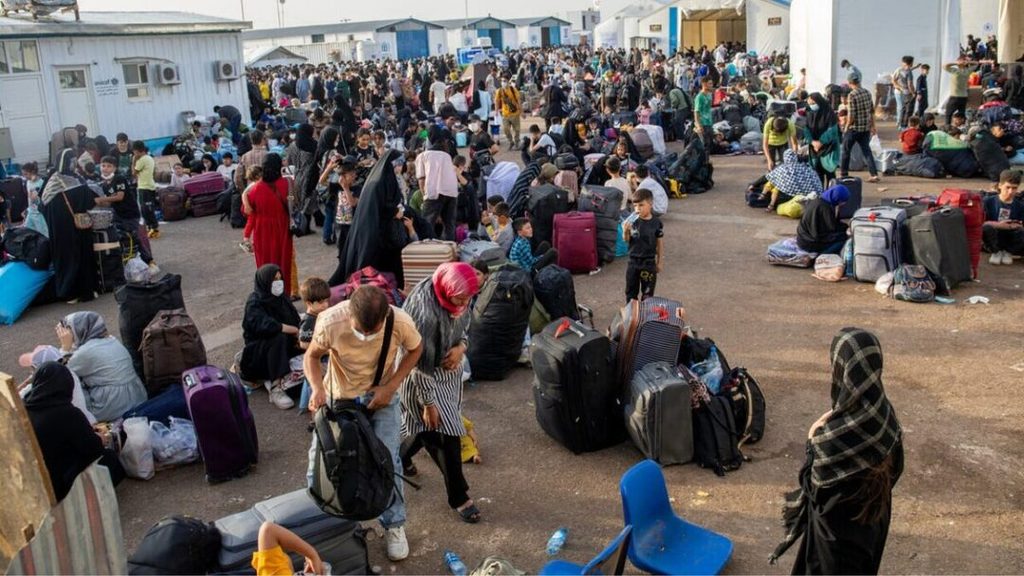
These difficulties are especially serious when large numbers of people arrive in communities already struggling with inadequate services and economic opportunities.
What Meaningful Accountability Would Require
A serious assessment of Iran’s deportation policy needs more than a cumulative number of people removed.
Useful public information would include how many individuals received protection assessments before removal, how many raised fears of persecution or serious harm, what opportunities existed to challenge decisions, and whether particularly vulnerable people received appropriate safeguards.
The treatment of identity documents also deserves attention. A person may lack a valid residence permit yet still have a protection claim requiring examination. Lost, expired or confiscated paperwork can complicate both the assessment of legal status and access to assistance after return.
Peiknet has examined a separate cross-border protection issue in its report on deportation cooperation and asylum confidentiality. That article concerns Iranian nationals facing removal from the United States, not Afghan nationals being returned from Iran. The governments, legal procedures and facts differ, but both situations illustrate why immigration enforcement must be distinguished from the duty to assess risks and protect sensitive personal information.
For the Iran-Afghanistan corridor, meaningful accountability would also involve monitoring what happens after removal. Information about access to housing, education, medical care and protection from reprisals would help establish whether people are able to rebuild their lives.
The broader evidence should be interpreted carefully. A documented human-rights violation after return may reveal a serious protection failure, but determining responsibility requires attention to what authorities knew or should have known before removal and which legal duties applied.
Beyond the Deportation Totals
The 2026 figures establish that forced returns from Iran are a major component of movement back to Afghanistan. They also expose the limits of measuring a humanitarian crisis primarily through border crossings.
A country can record thousands of removals without explaining whether individual risks were assessed, whether legal safeguards operated effectively or whether returnees found safety afterward.
Those are the questions that connect migration enforcement to international human-rights law.
For Afghan families, the distinction is not academic. A return may end one administrative process while beginning another period of uncertainty involving security, documentation, employment, schooling and family stability.
The central lesson of the available evidence is that the number of people sent across a border cannot substitute for examining their protection needs and the consequences of return.