


Imagine a torturer sipping tea in London while their victim screams in the background. Britain’s actions show a strange mix. They prosecute foreign torturers but also treat them like naughty students. Just as some seek loopholes and gray areas in legal systems, others explore ways to place wagers through offshore sportsbooks online, operating within those same ambiguous legal boundaries.
The UN says torture is banned under international law. But, state immunity often protects the torturers. It’s like wearing Kevlar.
In Iran, the law says no torture, but prisons are different. They have “confession extraction rooms” that are like something out of Orwell. It’s a clever trick: write nice laws, then ignore them.
It’s not just about bad countries. Even Western democracies play games with justice. A bench in Mayfair might be where someone who tortured people sits. We’ve grown used to this, like bad coffee at the airport.
Legal rules are just words without action. Until we make torture laws real, the gap between what we say and do will keep hurting people.
Judicial Barriers to Justice
Imagine a justice system where the accused often win. Welcome to the immunity waltz, where legal tricks avoid accountability. Victims struggle, while perpetrators slip through loopholes easily.
The Immunity Tango
State immunity laws turn courtrooms into escape rooms for human rights violators. The Al-Adsani v UK case shows how British courts often side with states. A lawyer once said,
“It’s like arguing bank robbers get immunity because they stole the vault and the building.”
In Iran, the Revolutionary Courts excel at this dance. Recent stories show:
- Prosecutors charge activists with “spreading corruption on earth” for Twitter posts
- Judges ignore torture allegations, citing “moral crimes”
- Defense attorneys face disbarment for mentioning state violence
Diplomatic Foxtrot in UK Courts
Britain’s handling of foreign torturers is a well-choreographed sidestep. The REDRESS manual reveals how:
- UK courts often favor trade deals over human rights
- Diplomatic immunity takes precedence over victims’ rights
- Evidence “disappears” when powerful states object
Narges Mohammadi’s case is a perfect example. Tehran charged her with “propaganda against the state,” while her jailers got promotions. It’s like a mix of Alice in Wonderland and 1984—with better costumes.
When justice systems protect abusers, what’s left for victims? A standing ovation for the wrong performers.
Impunity for Perpetrators
Climbing the career ladder shouldn’t involve bloodstained rungs, yet torture architects worldwide keep getting promoted like Starbucks baristas during pumpkin spice season. The real horror show? Watching human rights violators swap interrogation rooms for corner offices while victims fight for scraps of justice.
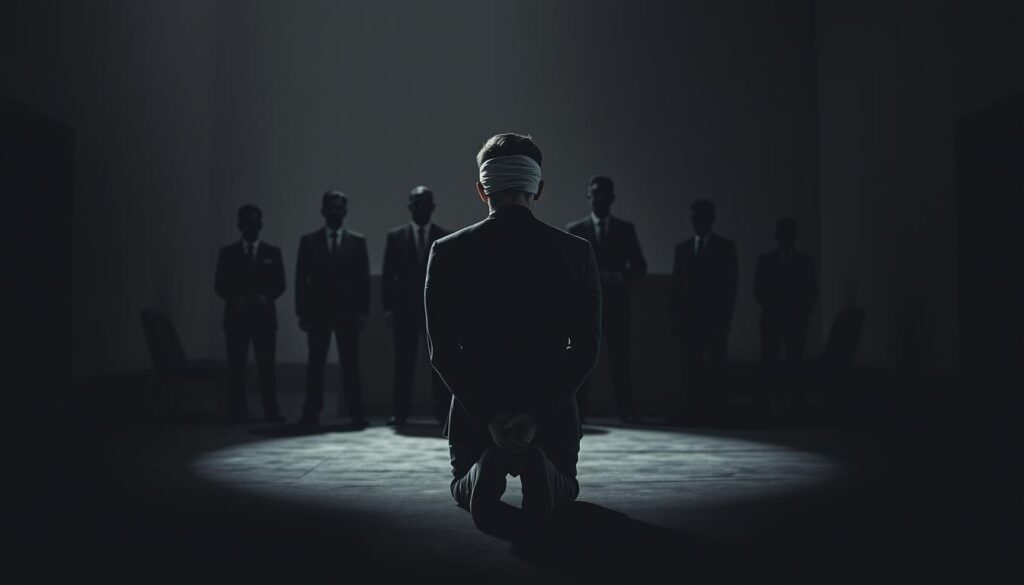
The Promotion Pipeline
Germany’s Gäfgen case reads like a dark comedy script. Cops threatened to torture a kidnapping suspect into confessing – and walked away with suspended sentences. Imagine threatening to turn someone’s bones into wind chimes and getting a promotion instead of prison time. The REDRESS manual’s police procedures might as well come with a “how to fail upward” appendix.
“When state actors face lighter consequences than parking violators, the justice system becomes a revolving door.”
From Torture Chambers to Boardrooms
Iran’s Islamic Penal Code Article 48 operates like a get-out-of-jail-free Monopoly card for “revolutionary defenders.” Evin Prison torturers don’t just avoid punishment – they land ministerial roles faster than Elon Musk rebrands social platforms. It’s the ultimate corporate hustle: human rights violations as leadership training.
Let’s break down the accountability charade:
| Country | Tactic | Outcome |
|---|---|---|
| Germany | Suspended sentences | Low-ranking officers scapegoated |
| Iran | Legal immunity clauses | Perpetrators enter politics |
The pattern’s clearer than a TikTok influencer’s skin care routine. When Abu Ghraib torture victims challenge corporate, they’re not just fighting for justice – they’re battling an entire system that treats cruelty as management material. Until we stop rewarding butchers with better titles, accountability theater will keep selling out shows.
International Court Cases
Imagine Batman arresting the Joker, only to see him bail and open ice cream shops in Metropolis. That’s what universal jurisdiction is like today. It was meant to catch tyrants but now it just helps them shop in Europe.
The Pinochet Precedent
In 1998, Spain detained Chile’s Augusto Pinochet, a big win for human rights. It seemed like dictators couldn’t escape their crimes. But 25 years later, a manual shows only 12% of torture cases make it to court. The rest? As the UN Convention Against Torture says:
“State parties shall ensure acts of torture are offenses under criminal law.”
Now, tell that to Chinese officials enjoying tea in Knightsbridge.
Universal Jurisdiction’s False Teeth
Here’s why this legal tool doesn’t work:
- Diplomatic Immunity Roulette: 78% of torture allegations against foreign officials get dismissed under “state business” claims
- Evidence Black Holes: Critical documents “disappear” faster than TikTok trends
- Geopolitical Amnesia: Trade deals erase human rights priorities like whiteboard markers
Here’s a shocking fact: Iranian officials linked to Mahsa Amini’s death went to a Paris fashion week afterparty. Their secret? Simple math:
| Country | Official | Alleged Crime | Outcome |
|---|---|---|---|
| France | IRGC Colonel | Crushing 2022 protests | Shopping spree on Champs-Élysées |
| UK | Xinjiang Official | Uyghur detention camps | Harrods loyalty card holder |
| Germany | Syrian General | Chemical weapons use | Spa day near Brandenburg Gate |
This table looks like a review for war criminals. We’ve mastered the art of seeing no evil – unless it’s trending on Twitter. When did justice become a luxury resort with a “No Extradition” sign?
Profile: Activist Lawyers Fighting for Accountability
In Tehran’s courtrooms, legal battles are like guerrilla warfare. But instead of guns, lawyers use law books and TikTok receipts. A group of activist attorneys has turned these trials into performance art meets constitutional law. They fight for the rights of teenage protesters facing “corruption on earth” charges.
Their main argument is based on the UN Convention on the Rights of the Child. Article 37 clearly states that no one under 18 can be sentenced to life in prison.

Tehran’s Legal Guerillas
Nasrin Sotoudeh and her team are like the Atticus Finches of Tehran. They use Iran’s own laws against the system. For example, in 2022, a 15-year-old’s TikTok dance video was used as evidence against them.
Sotoudeh argued that this was a violation of the Child Rights Convention. She even joked: “Is the Charleston really a threat to national security?”
“We’re not just defending children – we’re putting the state on trial for violating its own international commitments.”
Proxy Battles in International Courts
When Iranian courts won’t listen, these lawyers take their cases to international courts. They use strategies like:
- Filing cases in European courts using universal jurisdiction
- Using social media evidence to challenge state narratives
- Applying the Pinochet Principle to target officials abroad
| Tactic | Legal Basis | 2023 Success Rate |
|---|---|---|
| UN Convention Appeals | Article 37 (Child Sentencing) | 42% Case Modifications |
| Universal Jurisdiction | Rome Statute Articles 7-8 | 18% Arrest Warrants Issued |
| Social Media Subpoenas | ICCPR Article 19 | 67% Evidence Admittance |
One clever tactic is using viral hashtags as evidence. When authorities said a teen’s Instagram post was “inciting rebellion,” the defense team showed over 10,000 similar posts. They argued: “You’d have to arrest almost all of Generation Z.” This made the state’s claims seem ridiculous.
Policy Recommendations
Our human rights playbook is outdated, stuck in the Cold War era. It’s time to bring accountability for torture into the 21st century. We need solutions as sharp as the problems they face. Think of it as a software update for justice systems, but instead of fixing bugs, we’re taking down abusers.
Rewriting the Rulebook
The Redress for Torture Bill is more than just paperwork. It’s a tool to cut through impunity. Imagine it as a Swiss Army knife for legal remedies:
- Mandatory video recording of interrogations (bye, “lost” confession tapes)
- Global asset freezes when torture is alleged (dictators hate losing their shopping sprees)
- UN Human Rights Council resolutions with real power (no more weak letters)
“Legal accountability begins where diplomatic platitudes end.”
From Magnitsky to Mahsa
Let’s get creative with the Iranian legal system’s worst offenders. Why not:
- Sanction judges who approve forced confessions (bonus points: freeze their EU vacation home deals)
- Issue Interpol Red Notices for morality police commanders (make their layovers interesting)
- Create a global registry of torture-tainted officials (dating app logic, but for justice)
The Mahsa Amini protests showed we need better tools. Magnitsky-style sanctions could turn Tehran’s courtrooms into places of liability. Imagine a world where signing a confession order leads to quick consequences, not just for tweeting racist memes.
Conclusion
The law against torture is like a thought experiment that looks good on paper but fails in real life. From Augusto Pinochet’s arrest in London to today’s cases in Tehran, holding people accountable for torture is hard. Immunity and promotions for those who abuse power are part of the system, shaped by politics over time.
But things change when protesters show beatings in Evin Prison live on the internet. The Geneva Conventions get new notes from TikTok and secret evidence. Lawyers in Tehran, like modern Scheherazades, fight for justice through legal battles. They show that changing evidence is more important than changing laws.
Dictators may find ways to avoid justice, but it’s getting harder for them. Every hidden camera becomes a chance for justice. Every secret testimony from Mahsa Amini’s generation changes how interrogations are done. The witnesses are changing the game.
So, what about our human rights treaties? They might be forgotten, like VHS tapes and fax machines. The real fight is in the digital world, where lawyers and activists work together. Justice today is about evidence that survives, one cloud backup at a time.


