Iran airline sanctions widened sharply in 2026, moving from pressure on selected carriers toward restrictions that affected much of Iran’s aviation chain. The policy was presented by U.S. authorities as a national-security measure, including action against airlines alleged to support the Islamic Revolutionary Guard Corps-Quds Force. Its effects, however, extend beyond state institutions. They touch civilian travel, family contact, access to medical treatment abroad, and the safety of an aging air fleet.
The rights question is not whether sanctions can be lawful foreign-policy tools. It is whether their design and implementation adequately distinguish between military-linked activity and ordinary civilian life. For Iran, where domestic restrictions already limit freedom of movement for many people, the aviation measures arrived in a setting where travel rights were already fragile.
How Iran airline sanctions Reached Aviation Chains
How Iran airline sanctions Were Expanded
On August 24, 2026, the United States designated Iran’s aviation sector under Executive Order 13902, according to the OFAC Iran sanctions page. That placed aviation within a wider framework of sectoral pressure that also covered areas such as shipping, gold, digital assets, and other parts of Iran’s economy.
On September 8, 2026, the U.S. Treasury announced measures under “Operation Economic Outcast” against 36 entities and individuals described as aiding Iran’s aviation sector. The designations targeted airlines, providers of aircraft and parts, and foreign intermediaries in countries including the United Arab Emirates, Turkey, Malaysia, and Kazakhstan, as reported by Asharq Al-Awsat. Research notes also state that 27 Iranian airlines, including commercial and private carriers, were fully sanctioned in connection with the action.
The immediate effect of Iran airline sanctions was to narrow the legal and financial space around aircraft, spare parts, leasing, insurance, maintenance, and payments. The United States also suspended rights to overflight payments for U.S.-origin aircraft, according to the research record supplied for this article. These measures aimed to restrict access to equipment and services that U.S. authorities said could benefit sanctioned Iranian actors.
What The U.S. Cited
U.S. officials justified the measures on counterterrorism grounds. The research record identifies Mahan Air as a central example, noting that the airline had previously been subject to counterterrorism sanctions for alleged transport of weapons and personnel for the IRGC-Quds Force. Those allegations are serious and form the stated basis for much of Washington’s aviation pressure.
A rights analysis must keep two findings separate. First, governments may target entities they allege are supporting military or sanctioned networks. Second, broad aviation restrictions can reach people who are not involved in those networks. That second effect is where civil liberties concerns become more acute.
Civil Aviation Safety And Human Rights Concerns
Fleet Age And Spare Parts
Iran’s civil aviation sector has faced long-running difficulties in obtaining aircraft, spare parts, software upgrades, maintenance support, and international insurance. A 2022 report by the United Nations Special Rapporteur on the negative impact of unilateral coercive measures stated that sanctions and overcompliance by foreign firms had caused delays or cancellations in procurement affecting civil aviation safety and human lives. The research record also states that, as of 2025, about 60 percent of Iran’s passenger aircraft fleet was estimated to be grounded, with an average civil aircraft age of 28 years.
Those figures cannot by themselves establish that a specific incident or safety outcome was caused by sanctions. They do show why aviation sanctions require scrutiny beyond state-to-state pressure. Civil aviation safety depends on predictable access to parts, inspections, technical updates, training, and insurance. When any of those channels are restricted or avoided because private firms fear sanctions exposure, the burden may fall on passengers and crews.
Overcompliance As A Civilian Risk
Overcompliance is a recurring issue in sanctions policy. Firms outside the United States may refuse lawful transactions because they judge the legal, banking, or reputational risk to be too high. In aviation, that can mean suppliers, insurers, and maintenance providers withdraw even where humanitarian or safety-related activity may not be formally prohibited.
The result is a gap between the text of sanctions rules and their practical effect. A license, exemption, or policy clarification may exist, but a company may still decline to provide service. For civilians, that distinction offers little relief if a flight route disappears, an aircraft cannot be serviced, or a medical trip abroad becomes unaffordable.
Movement, Family Contact, And Medical Access

Travel Routes After The 2026 Measures
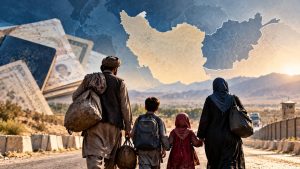
Research supplied for this article states that Iran’s international air capacity fell 49 percent in August 2026 compared with August 2025. It also states that many Iranians shifted to overland routes after air-service refusals and flight restrictions, with black-market bus ticket prices from Iran to Turkey reportedly rising to four times their usual rate because of demand.
Those changes matter for civil liberties because freedom of movement is not only a border issue. It affects students, migrant workers, divided families, patients seeking specialized treatment, and people who need to leave quickly for lawful personal reasons. The cost of a route can become a practical barrier even where formal exit is still possible.
Peiknet has separately examined how Iran flights suspended became part of a wider pattern of isolation through air, land, and maritime pressure. For additional insights and discussions on this topic, readers might find it helpful to visit The US Report, a related site in the same network.
Iran’s Own Restrictions Still Matter
The effect of sanctions cannot be assessed apart from Iran’s domestic controls. Freedom House’s 2026 reporting, cited in the research record, described Iran’s civil liberties as severely restricted, including freedom of movement. The same record notes that women often require permission from male guardians for passports or travel abroad.
This means the burden is layered. A person may face state restrictions inside Iran, then reduced flight availability, higher prices, and banking or documentation barriers outside Iran. Sanctions did not create all of those limits, but they can intensify the practical difficulty of movement for people already subject to domestic discrimination or administrative control.
- Students and workers may face higher costs for travel connected to study, employment, or family obligations.
- Patients may find it harder to reach treatment abroad when flights are limited or unaffordable.
- Families split across borders may have fewer safe and affordable routes for contact.
- Women and other groups facing domestic travel restrictions may experience compounded barriers.
Iran airline sanctions And Civil Liberties
The most defensible reading of Iran airline sanctions is that they serve a stated security purpose while creating foreseeable civilian effects. The policy targeted aviation networks that U.S. authorities linked to sanctioned Iranian institutions. At the same time, aviation is a civilian infrastructure system. Pressure on aircraft supply chains, payment channels, maintenance, insurance, and foreign service providers can reach ordinary travelers far from the conduct that sanctions were designed to punish.
For human-rights analysis, the core questions are practical and evidence-based. Are safety-related channels for parts and maintenance clear enough that companies will use them? Are humanitarian and medical travel routes preserved in practice, not only on paper? Are licenses processed quickly enough to prevent avoidable harm? Are sanctions calibrated to avoid collective restrictions on movement?
As of October 13, 2026, the September measures had already taken effect, but their full rights impact remained difficult to measure from public data alone. What is supported by the available record is narrower and still significant: U.S. aviation sanctions expanded in 2026; Iran’s aviation sector faced deeper restrictions on services and equipment; travel routes became more constrained; and civil liberties concerns intensified in a country where movement rights were already heavily limited by domestic law and practice.