Iran’s new school year began in late September 2026, bringing students back to classrooms after months of disruption linked to war, insecurity and interrupted communications. Yet reopening school buildings does not necessarily mean children have recovered the education they missed.
Some Iranian schools resumed face-to-face teaching while others continued remote instruction. Teachers have raised concerns about lost learning time, unequal access to technology and the difficulty of rebuilding classroom routines.
Questions about responsibility for the Minab attack have also been examined in Peiknet’s reporting on UN experts’ findings concerning Iranian airstrikes.
Iran school recovery after war requires three things beyond physical reconstruction: reliable access to lessons, support for children who have fallen behind, and safe learning environments. These are separate challenges, and progress in one does not automatically resolve the others.
What Iran’s School Damage Figures Actually Show
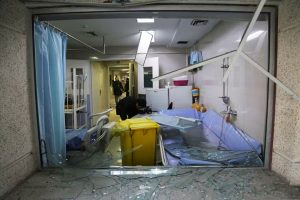
In its April 7 statement, UNICEF’s assessment of the conflict’s impact on children reported that more than 760 schools had been damaged or destroyed in Iran. The figure reflected information available at that time, not a final assessment of the entire conflict.
Later figures provided by Iranian education officials were higher.
An October 8 review of Iran’s school reconstruction efforts reported that Hamidreza Khan-Mohammadi, head of Iran’s School Renovation Organization, identified 1,288 schools affected by war damage. Sixteen reportedly required complete reconstruction or substantial structural repairs.
These figures should not be interpreted as evidence that another 528 schools were necessarily attacked between April and September. The assessments were compiled at different times, and the underlying categories and reporting methods may not be identical.
The distinction between damage and closure is equally important.
Iranian officials said many affected schools had been repaired or returned to service before the academic year began. A temporary replacement school also opened in Minab on September 23 for children affected by the destruction of Shajareh Tayyebeh Primary School.
However, an operational replacement building does not establish that every pupil has returned to regular instruction or that the emotional and educational consequences of the original attack have been resolved.
Why Returning to Class Does Not End Learning Disruption
Months of interrupted schooling can create difficulties that remain after buildings reopen.
In September 28 reporting on Iranian students returning to school, teachers described struggling to restore normal lessons after extended periods of virtual instruction. One teacher said four months of the preceding nine-month school year had been spent online.
At the time of that report, some southern schools were also continuing remote instruction during the opening weeks of the academic year. Those arrangements were described in late September and should not automatically be assumed to remain unchanged in October.
Online learning can help maintain education when classrooms are unavailable. But its effectiveness depends on reliable communications, functioning devices, suitable study conditions and regular contact with teachers.
Students without dependable internet access may miss lessons that classmates can attend. Families sharing a single phone or computer can face additional difficulties.
Iran’s Education Ministry reportedly used several approaches during disruptions, including online classes through the domestic Shad platform, televised lessons and printed educational materials.
These alternatives address different access problems. Printed materials may reach students without reliable internet, while online lessons can enable direct communication when connections work.
Neither approach guarantees that students are learning at the expected level.
A useful recovery programme would therefore identify which students missed essential material, provide opportunities to catch up and help teachers understand where additional support is needed.
School Safety Is Part of Educational Recovery
The destruction of Shajareh Tayyebeh Primary School in Minab on February 28 placed civilian protection at the center of international scrutiny.
In its statement calling for schools to be kept out of conflict, UNESCO emphasized the protections afforded to educational institutions, students and teachers under international humanitarian law.
The legal investigation and the educational recovery process address different needs. Establishing responsibility for an attack does not restore missed lessons, while repairing a school does not settle questions of accountability.
For families, safety also involves practical conditions at schools.
Buildings need to be structurally suitable for use. Schools must be able to provide basic sanitation and dependable access to essential services. Peiknet’s earlier examination of emergency drinking-water safety in Iran explains one infrastructure problem affecting conflict-impacted communities.
Psychological wellbeing also deserves attention. Children and teachers may return to familiar routines while continuing to experience grief, anxiety or uncertainty. Support should be available without assuming that every affected child has developed a mental health disorder.
What Would Demonstrate Meaningful School Recovery?
A national reopening announcement is an important milestone, but it is not a complete measure of educational recovery.
A stronger assessment would distinguish several outcomes: schools physically repaired, schools actually delivering regular lessons, students consistently attending, and children receiving help with interrupted learning.
Public reporting would be more useful if it identified which schools still require substantial reconstruction, where remote instruction remains necessary and how students without reliable digital access are being supported.
Progress should also be measured over time. A school operating during its first reopening week may still encounter problems with attendance, staffing, transportation or basic services later in the term.
The central challenge is ensuring that reconstruction translates into sustained education.
For Iranian children, recovery means more than returning to a classroom. It means having a safe place to learn, teachers who can provide consistent instruction, and a realistic opportunity to recover the education disrupted by war.