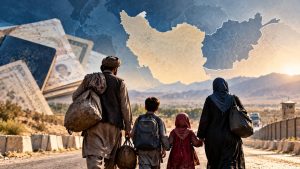
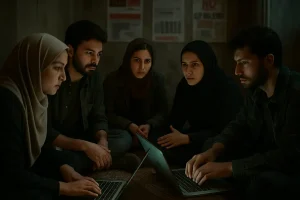
Iran gender sanctions are not a single policy category in Washington or Tehran. They describe an intersection: U.S. and allied sanctions aimed at Iran’s state institutions, the economic strain those measures help produce, and the pressure that strain places on women’s equality movements inside Iran.
The evidence available in recent reporting and institutional material points in two directions at once. Some sanctions are framed by U.S. bodies as accountability tools against officials linked to women’s rights abuses. Broader economic sanctions, however, have also contributed to conditions that reduce women’s employment, weaken health access, and make rights-based organizing more costly. That distinction matters because gender equality movements depend not only on legal demands, but also on time, income, communication, mobility, and safety.
This assessment centers on what is supported by the research record: sanctions are one driver among several, alongside domestic repression, wartime pressure, inflation, legal discrimination, and state enforcement of mandatory hijab rules. For readers interested in understanding how political narratives shape international debates, analysis of political communication strategies can offer insights into why governments and external actors interpret sanctions so differently.
What Iran gender sanctions Mean For Women’s Rights
Sanctions As Pressure And Sanctions As Context
The term needs care. U.S. sanctions are not imposed on women’s movements as such. They target Iranian state entities, officials, sectors, or networks under legal authorities tied to nuclear policy, security issues, human rights, and other concerns. Yet sanctions operate inside society, not in a vacuum. When the currency loses value, prices rise, imports become harder, or employers cut hiring, women’s organizations and informal equality networks face a harder environment.
Recent research notes cite a female labour force participation rate in Iran of around 14% in 2025, compared with about 67% for men. They also cite a decline from about 15-16% between 2021 and the summer of 2024 to roughly 12.5%. Those figures cannot be attributed to sanctions alone. Still, UN-linked material in the research record connects sanctions-related instability, inflation, and loss of purchasing power to shrinking economic opportunities, especially for women.
Iran gender sanctions And Economic Independence
Economic independence is not separate from gender equality activism. Women who can earn, travel, study, hire counsel, pay for child care, or support relatives have more practical space to participate in public life. When household income falls, activism can become a risk that families cannot absorb.
The effect of Iran gender sanctions is therefore partly indirect. If sanctions deepen inflation and weaken employment, women may be pushed into lower-paid informal work or unpaid family labour. That does not end activism, but it can change its form. Public campaigns may become harder to sustain, while smaller networks of mutual aid, legal support, and information-sharing carry more of the burden.
Economic Pressure And Gender Equality Work
Employment, Prices, And Civic Capacity
Research notes for early 2026 describe steep food price inflation, with many essential items doubling over a 12-month period. They also state that, since the U.S. withdrawal from the 2015 nuclear deal in May 2018, the Iranian rial lost more than 95% of its open-market value by early 2026. These conditions affect many Iranians, but gendered effects are visible because women often manage household purchasing and care work, while also facing narrower access to formal employment.
For equality movements, the practical impact can be severe. Organizing requires resources: transport, internet access, printing, legal aid, medical treatment after detention or assault, and the ability to miss paid work. Inflation reduces each of those capacities. It also increases dependence on family or employers, which can limit women’s ability to challenge discriminatory rules.
The research record also includes a more limited counterpoint. In 2024, pilot projects in four Iranian provinces reportedly increased women’s employment rates by 5.14% through UN-Iran initiatives involving vocational training and platform partnerships. These results suggest that targeted support can help women enter work even during economic strain. The limitation is scale: localized gains do not offset national pressure on employment and purchasing power.
Health Access And Movement Sustainability
Health access is another pathway through which economic sanctions and domestic policy pressures affect gender equality work. Research notes based on late 2024 and early 2025 material state that sanctions negatively affected hospital performance, contributed to shortages of essential medical equipment, and impaired mental health through reduced access to medicines. Women and girls were identified among those most affected.
For activists, health constraints are not only private hardships. They shape whether people can attend meetings, continue education, recover from stress, or care for family members. Movements for gender equality require social resilience. When health systems are strained, the burden often shifts to households, and within households it frequently shifts to women.
Enforcement Policy, Hijab Rules, And Targeted Sanctions
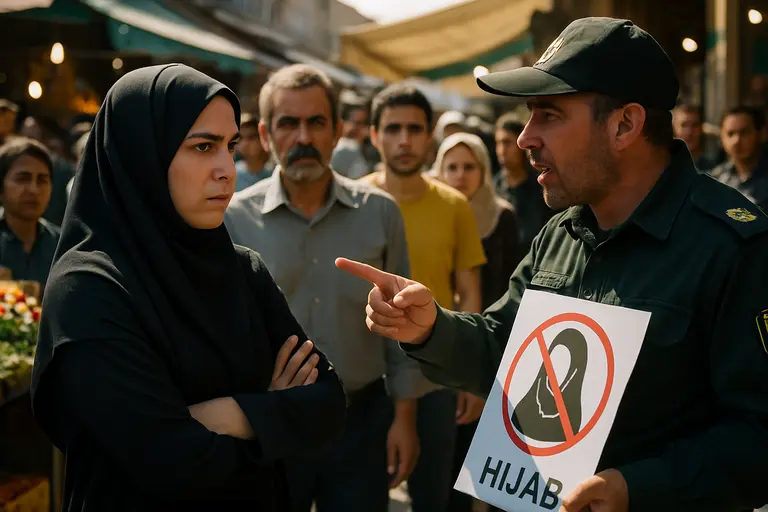
Mandatory Hijab Enforcement Under Economic Strain
In late September 2026, the Associated Press reported that U.S. sanctions, a naval blockade, and wartime pressures had pushed Iran’s economy toward collapse, contributing to officials’ hesitation to enforce mandatory hijab rules as harshly because of concern over public backlash AP reporting. That account does not mean enforcement ended. It indicates that economic pressure affected the state’s calculation over how much coercion could be used without widening public defiance.
This is one of the clearest ways sanctions and gender politics intersect. Economic crisis can make a state more cautious if it fears unrest. The same crisis can also leave activists with fewer resources and greater exposure to punishment. Both effects can exist at the same time.
Peiknet has previously examined how Iran’s enforcement system has extended beyond police action into commercial settings, including pressure on cafés, shops, restaurants, and sports clubs in the hijab business crackdown. That pattern matters because dress-code enforcement can turn ordinary economic activity into a site of gender control.
Targeted Measures Against Rights Abuses
Not all sanctions have the same human-rights implications. In April 2024, the U.S. Commission on International Religious Freedom called for further sanctions on officers responsible for enforcing hijab mandates under Iran’s “Nour” campaign USCIRF statement. That was a policy recommendation by a U.S. federal commission, not a finding by an Iranian court or an international tribunal.
Targeted sanctions of this kind are designed to identify officials or units linked to abuses, rather than impose broad pressure on the economy. Human-rights advocates often distinguish between such measures and sector-wide sanctions that can have wider social costs. The research record here supports that distinction: sanctions aimed at alleged enforcers of hijab mandates pursue accountability, while broad economic pressure can restrict the resources available to women’s movements.
Political representation remains another marker of constrained equality. Research notes cite UN statistical material stating that women held 4.9% of seats in Iran’s national parliament in 2025, down from 5.9% in 2020. Economic hardship alone does not explain that low share. Candidate vetting, legal structures, political culture, and repression all matter. But when economic pressure reduces civic engagement, women who already face barriers may be pushed further from formal politics.
Iran gender sanctions and the Space for Equality Work
What Can Be Safely Inferred
Any assessment of Iran gender sanctions should avoid a simple claim that sanctions either help or harm women’s rights in only one direction. The record supports a narrower and more careful finding: broad sanctions and related economic pressures can weaken the material base for women’s equality work, while targeted sanctions may be used by outside governments to signal accountability for specific rights abuses.
Narges Mohammadi, according to the research notes, told AP on September 20, 2026, that Iranians, particularly women activists, were paying an extremely heavy price from the combination of war, sanctions, and domestic repression. That framing is consistent with the broader evidence: activists are not dealing with sanctions in isolation. They are facing a stacked set of pressures that includes state control, economic breakdown, and social exhaustion.
For policymakers, the human-rights question is not whether sanctions can be justified in legal or diplomatic terms. It is whether sanctions policy accounts for its effects on the people whose rights it claims to defend. Measures aimed at officials accused of enforcing discriminatory rules have a different profile from broad restrictions that reduce access to work, medicine, and civic participation. Gender equality movements in Iran are likely to be shaped by that difference for as long as sanctions remain a central instrument of outside pressure.