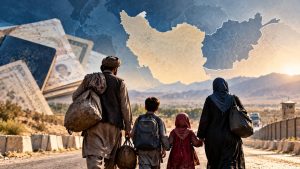
The Iran Economic Crisis has moved beyond macroeconomic strain into questions of daily survival, equal access to medicine, and the state’s human-rights obligations. As of October 10, 2026, the available evidence points to a pressure system with several layers: sanctions that restrict trade and finance, domestic economic mismanagement, declining purchasing power, and state repression that has narrowed civic space at the same time households face rising costs.
The clearest public indicators are inflation, unemployment, and medicine access. IranWire reported that point-to-point inflation reached 87.9% in July 2026, while unemployment in spring 2026 stood at 9.1%, up 1.8 percentage points from spring 2025 IranWire reported. Those figures do not by themselves prove the full cause of the crisis, but they show the scale of the burden on households whose wages and savings have not kept pace.
The US Report, a related site in the same network, offers insights into U.S. policy debates relevant to Iran. The Iran-focused question is narrower: how economic measures, state policy, and rights protections interact inside Iran, particularly for people with the fewest resources. For readers curious about how these global policy discussions unfold, The US Report provides coverage that complements the analysis here.
Iran Economic Crisis And The Rights Burden
Iran Economic Crisis In Official Indicators
The Iran Economic Crisis is visible first in prices. Research cited by IranWire said year-on-year inflation rose to 66% in early 2026 before the July 2026 point-to-point figure of 87.9%. The same reporting said employment declined by about 450,000 people in spring 2026 compared with spring 2025, while the economically inactive population increased by about 800,000. These are not abstract changes. They affect whether families can remain in work, pay rent, buy food, or seek health care before illness becomes urgent.
The right to an adequate standard of living is not measured only by a national inflation rate. It is measured through the ability of people to meet basic needs without discrimination and without arbitrary state interference. When prices rise at the pace reported in 2026, families with fixed incomes, informal jobs, rural livelihoods, or unpaid care responsibilities face sharper exposure.
Why Poverty Risk Is Uneven
The research record points to uneven harm. Studies cited in the research notes found that poor households, female-headed households, rural families, people with lower education levels, and informal workers face higher risks of entering or remaining in poverty during periods of sanctions pressure. That pattern matters for human-rights analysis because equal treatment is not achieved when formal legal protections exist on paper but economic pressure falls hardest on groups already excluded from secure work and public resources.
Women face a particular risk where labor-market barriers, lower wages, and higher unemployment exposure combine with inflation. Peiknet has examined related questions in its coverage of gender sanctions and equality, including the link between economic restrictions, work opportunities, and civic space. The available evidence does not support a single-cause explanation. It does support a finding that sanctions and domestic policy failures can produce rights effects that are gendered and class-based.
Sanctions, Medicine, And Civilian Harm
Medicine Access Became A Rights Issue
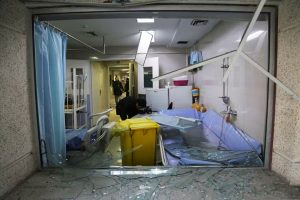
Medical access is one of the most sensitive links between sanctions and human rights. Humanitarian goods may be formally exempt from sanctions, but financial restrictions, currency collapse, payment problems, and supply-chain weakness can still affect whether patients obtain medicine in practice. Associated Press reporting in mid-2026 said prices for food and other goods, including drugs, had sharply increased, and that prices for about 2,000 types of medicines had been “amended” over the prior six months because of inflation and currency issues the AP reported.
That distinction matters. A legal exemption does not automatically produce access at a pharmacy counter. If imports, raw materials, insurance systems, or domestic production are disrupted, the right to health can be impaired even when no policy explicitly bans medicine. The available research does not quantify how many patients were unable to obtain treatment in 2026. It does support a narrower finding: medicine affordability and availability were under pressure at the same time inflation and currency weakness intensified.
Where Legal Responsibility Is Divided
International sanctions are imposed by outside governments or institutions, while Iran’s domestic authorities retain obligations toward people under their jurisdiction. A rights-based assessment should not erase either side of that responsibility. Sanctioning authorities must assess foreseeable civilian harm, protect humanitarian channels, and review whether measures are proportionate. Iranian authorities must prevent discrimination, corruption, and denial of care, and must not use external pressure as a basis to suppress peaceful dissent.
The European Union’s March 30, 2026 extension of restrictive measures addressing serious human-rights violations in Iran, according to the research record, targeted travel, assets, internal repression equipment, and telecom monitoring equipment. Such measures differ from broad economic pressure aimed at entire sectors. The distinction is central: targeted rights sanctions seek to restrict alleged perpetrators or tools of repression, while broad economic restrictions can impose wider social costs if safeguards fail.
Repression During Economic Distress
State Power And Public Grievance
Economic pain does not automatically produce protest, and protest does not automatically prove the cause of economic policy failure. Still, rights groups cited in the research notes reported severe repression in 2025 and early 2026, including executions, arbitrary arrests, denial of medical care to detainees, compulsory hijab enforcement, and persecution of the Baha’i minority. These claims should be read as attributed reporting by human-rights monitors, not as court findings unless a competent tribunal has ruled on a specific case.
Human Rights Watch reported on February 4, 2026, that Iran carried out more than 2,000 executions in 2025, many for drug-related offenses, and alleged that many cases involved serious fair-trial violations. Because capital punishment is irreversible, due process protections are central. Where economic crisis and repression occur together, the risk is that public grievance is treated as a security threat rather than a policy warning.
Internet Restrictions And Access To Remedies
The research notes also refer to internet shutdowns and telecommunications restrictions during crackdowns in early 2026. Such restrictions can affect more than speech. They can limit access to emergency information, legal assistance, family contact, documentation of abuse, and work. In a high-inflation environment, cutting communications can deepen harm for people who depend on online payments, remote work, transport apps, or digital contact with relatives abroad.
Evidence standards are especially important in this area. Claims about protest deaths, detention numbers, or shutdown scope should be attributed to named organizations or official records when available. The rights concern remains clear even where some figures are contested: restricting communications during unrest can obstruct accountability and reduce the ability of affected people to seek help.
What The Evidence Can And Cannot Prove
Confirmed Indicators
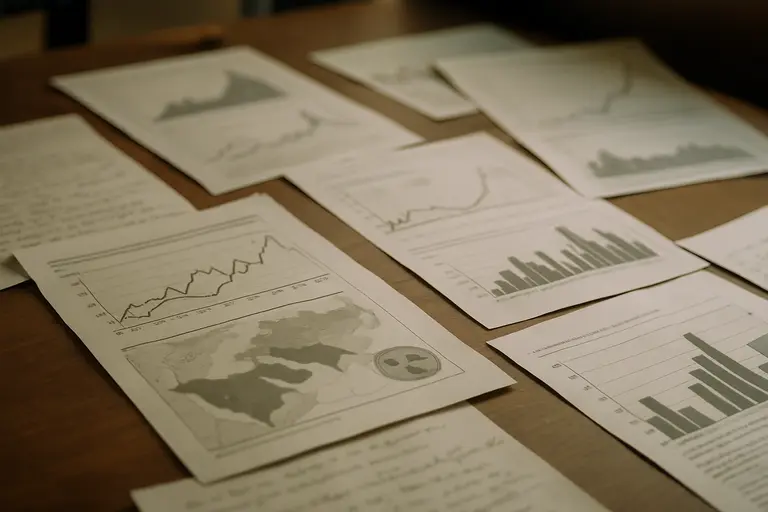
The strongest public evidence confirms severe inflation, higher unemployment, medicine price pressure, and reported rights abuses. The research also cites projections that Iran’s economy would contract in 2026 and that poverty could rise further by 2028 if trends persisted. Projections are not outcomes. They are warnings based on assumptions, and they should be treated as conditional.
- Inflation indicators in 2026 showed extreme pressure on purchasing power.
- Spring 2026 unemployment rose compared with spring 2025.
- Medicine prices and supply conditions were strained by inflation and currency problems.
- Rights monitors reported severe repression, including executions and fair-trial concerns.
Unresolved Questions
The harder question is allocation of responsibility. Sanctions restrict resources, finance, trade, and confidence. Domestic governance choices shape subsidy policy, currency management, social protection, labor rights, policing, and corruption control. The Iran Economic Crisis cannot be reduced to one factor without losing accuracy. The available record supports a layered assessment: outside pressure has harmed economic conditions, while Iranian state decisions have shaped how that harm is distributed and how dissent is treated.
That is why human-rights analysis differs from ordinary economic commentary. It asks who is harmed first, who has recourse, and whether authorities are protecting or punishing those most exposed. It also asks whether sanctioning states have designed exemptions that work in practice, not only in legal text.
Iran Economic Crisis And Human Rights Accountability
The Iran Economic Crisis is now a test of legal and political accountability. Sanctioning governments should be judged on whether their measures are targeted, reviewable, and accompanied by functioning humanitarian channels. Iranian authorities should be judged on whether they protect access to health, food, work, fair trials, and peaceful expression during economic distress.
The evidence available by October 10, 2026, supports a sober finding: sanctions and economic collapse have placed severe pressure on civilian life, while repression has narrowed the space for people to challenge policy or seek remedies. A rights-centered response would require transparent data, protected humanitarian trade, independent monitoring of detention and trials, and social protections directed toward those most exposed to poverty. Without those safeguards, the costs of the crisis will continue to fall on people least able to absorb them.